Fire and Grass
The whole history of Sean's world, told from forty-three save files — the maps as he left them, the numbers as the saves remember them, and the builder, alone, in stages.
Sources: every save in the folder, scried and dated · every photograph below is the actual game, exactly where he stood when he pressed save.
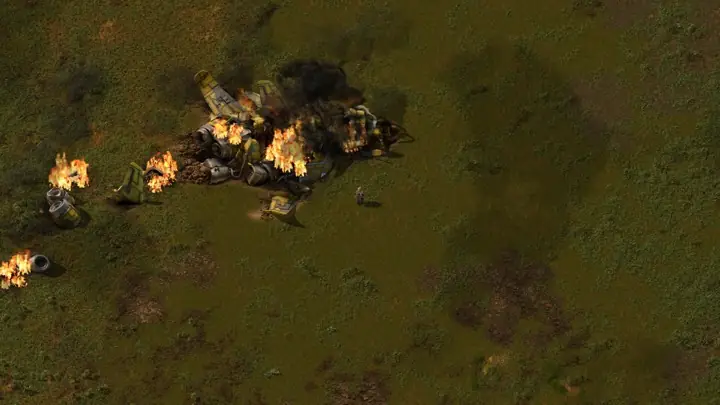
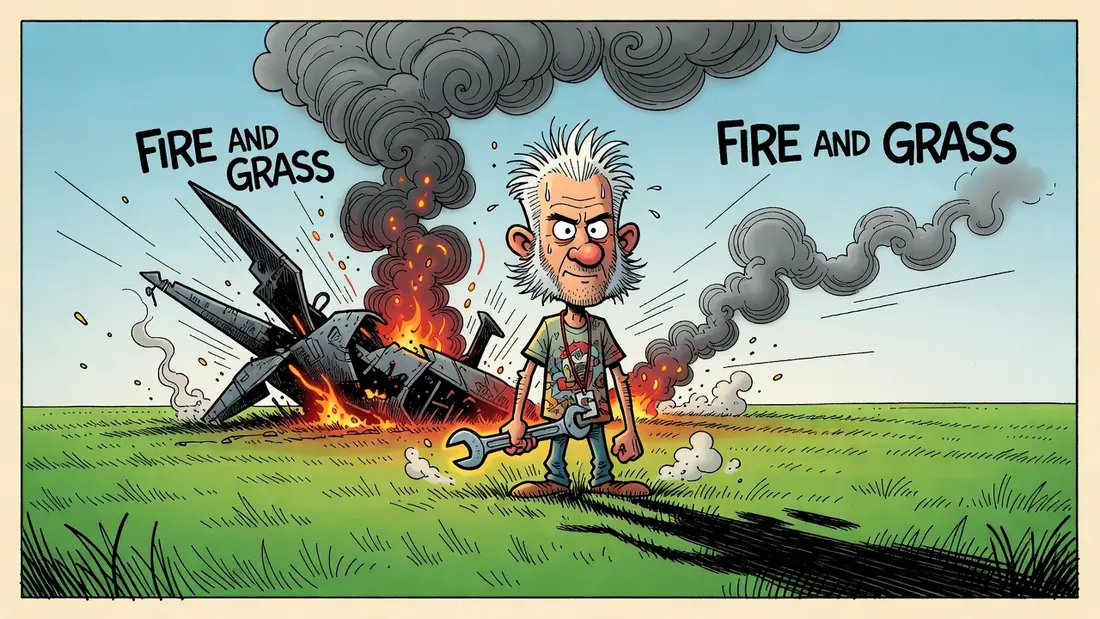
This is the oldest photograph the folder holds, and it needs no help. A ship, burning. Grass in every direction. One man standing in the smoke with the clothes he crashed in.
There is no factory in this picture. There are no walls, no belts, no light but the fire. Everything that follows — the six million plates, the five stations hanging in orbit, the seven hundred turrets — every bit of it descends from this exact frame: a man, a wreck, and an afternoon with nothing else to do.
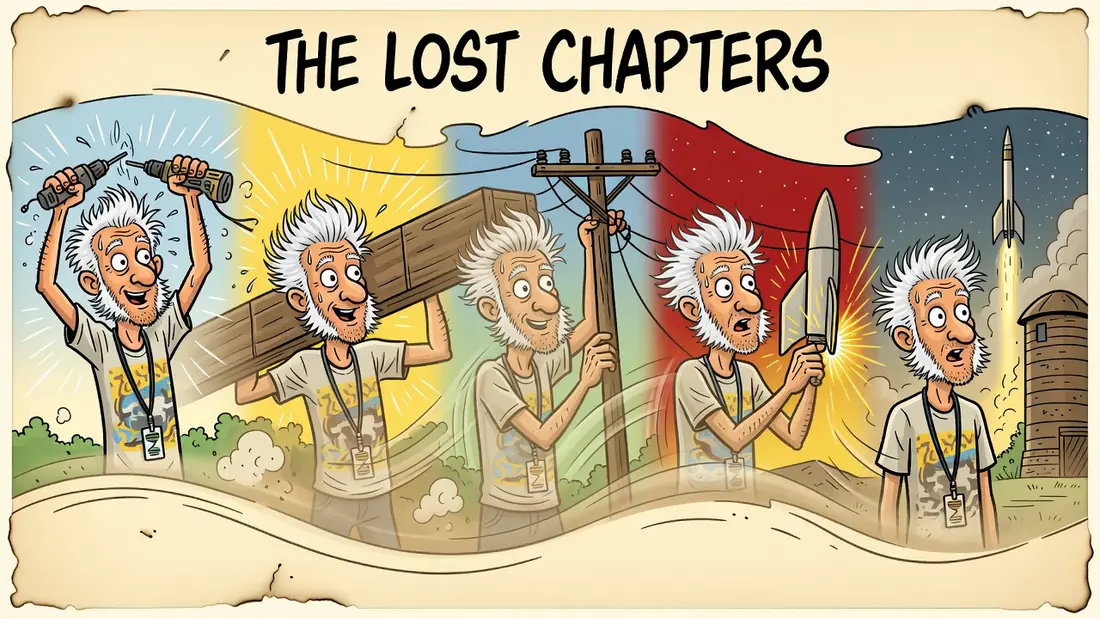
Then the record goes dark. Two hundred and fifty-five hours — more than ten full days of played time — passed between the crash and the next surviving save, and every file from that era was overwritten by the eras that followed. This is the archaeology problem in its purest form: the most important chapters are the ones nobody thought to keep.
But the later saves carry the evidence of what happened in the dark. When the record resumes, all six sciences are flowing. A rocket has flown three hundred sixty-nine times. Vulcanus has been walked, Fulgora has been sorted, Gleba has been planted. Five space platforms — Moon01, and all four Pallas sisters — are already hanging in the sky, already old. Somewhere in those lost hours a man went from warming his hands at a wrecked ship to running an interplanetary civilization, and the folder kept not one frame of it.
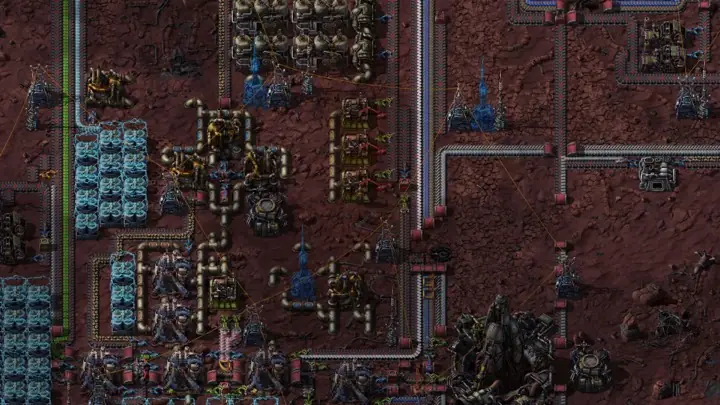
The first save that survives in full is labeled, in Sean's own filing system, "fulgora -- restructureD" — capital D, the flourish of a man who finished something. The scry reads it like a census: 17,416 machines on Nauvis alone. 3.73 million iron plates already smelted, lifetime. 3,579 enemy nests already ringing the walls, waiting.
From here forward, the chronicle is continuous — sixteen months of real time, one hundred twenty-seven hours of played time, forty-two more saves. What follows is not the story of building an empire. The empire, remarkably, already existed. What follows is the story of what a builder does with one.
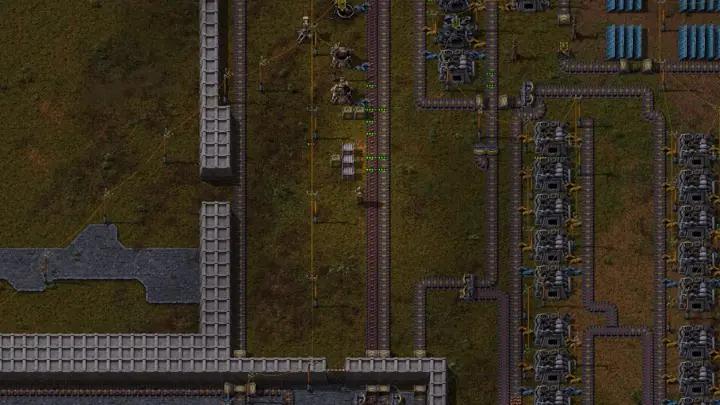
The first recorded era is quiet, methodical work: +1,773 machines in twelve hours, the census climbing to 19,189. The photographs from these months show the signature of a reorganizer — fresh wall segments with clean corners, a rail spine stitched through the middle of everything, ranks of steam engines still carrying the base's heartbeat the old way.
The world noticed. The nest count outside the walls rose from 3,579 to 4,133 in the same window. This is the quiet arithmetic that will run underneath every chapter that follows: the builder builds, and the world builds back.
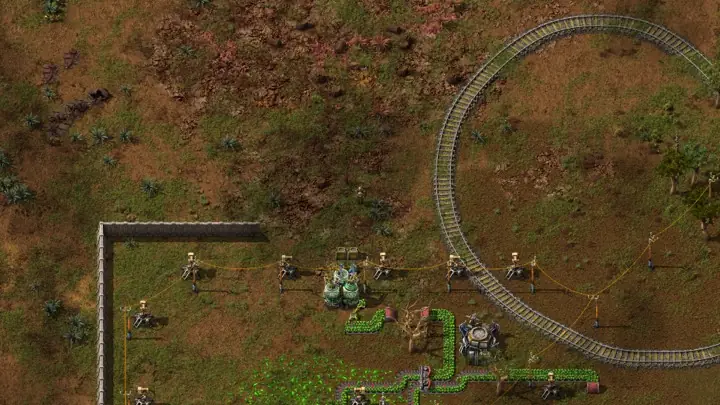
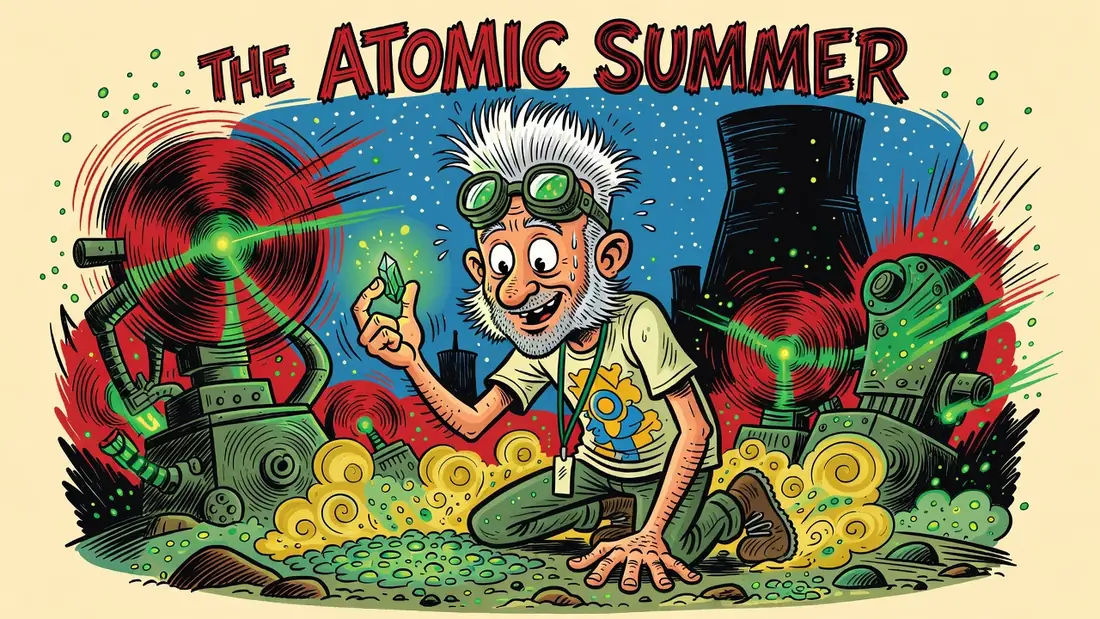
On August 7th, 2025 — hour 267 of the world — two lines appear in the research ledger that change its physics forever: uranium processing, and nuclear power. The photographs turn green at the edges. Centrifuges start their long spin. A patch of glowing ore that the base had walked around for two hundred hours becomes, overnight, the most important field on the planet.
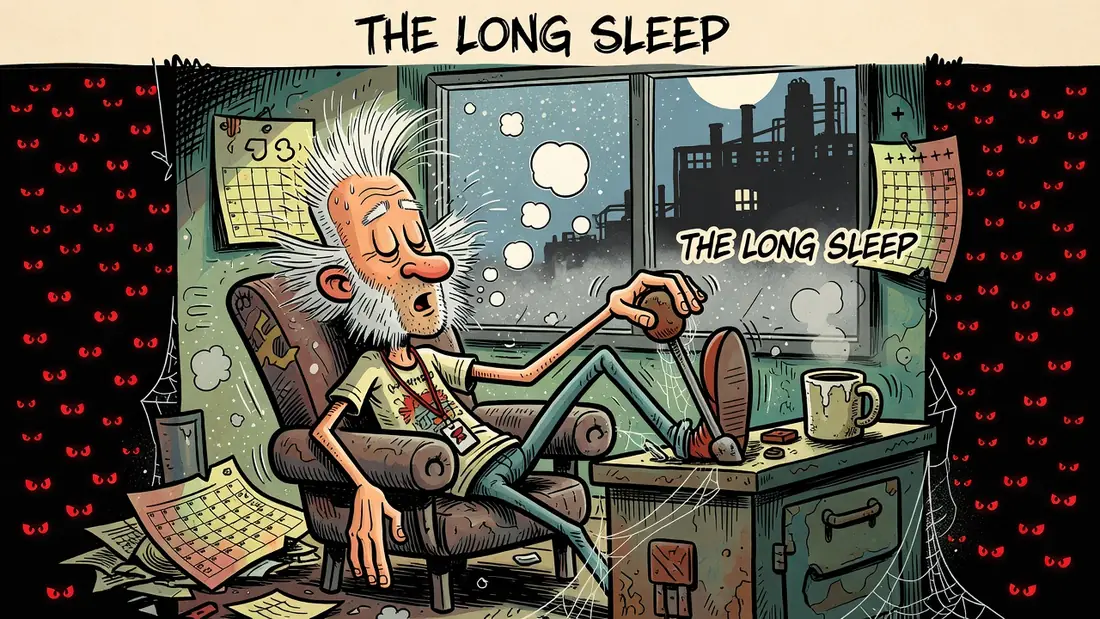
It is the last great infrastructure leap the record shows for a long while. As summer ends the pace slows — a few hundred machines, two small techs — and the saves begin to carry the names of a man drifting: foo, foo2, and then, with perfect honesty, long sleep.
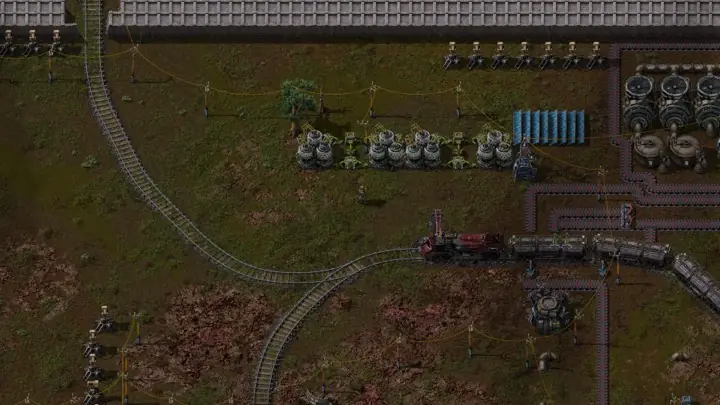
Then the world goes still. Between September and the end of December 2025 the research ledger advances exactly twice. The rocket counter does not move at all — three hundred seventy-one, for months. The save above is literally named "long sleep", and its photograph shows what that means: a train paused mid-journey at dusk, no smoke, no motion, a factory idling in the half-dark like a house with the lights left on.
The world did not sleep. While the builder was away the nests outside grew from 4,455 to 5,066 — six hundred new colonies raised in the silence, the red edge of the map creeping toward the walls at the speed of neglect. Every empire has these months. The saves just usually don't admit it in the filename.
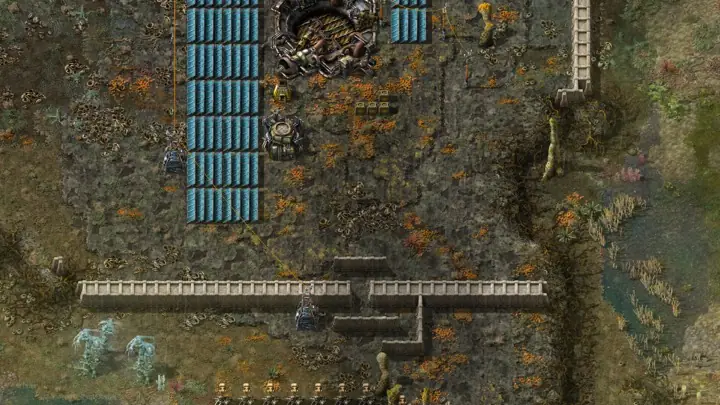
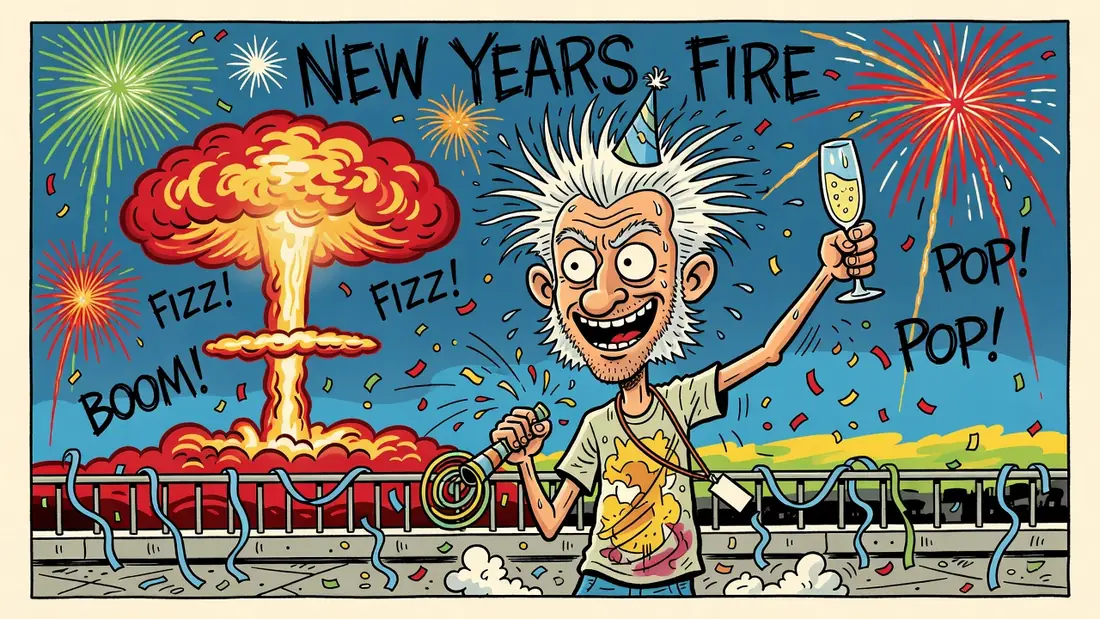
And then, in the last three days of 2025, the builder wakes up all at once. The rocket counter, frozen at 371 for three months, leaps to 406 — thirty-five launches in a single holiday stretch. Four technologies land in as many days. And on New Year's Eve itself, at hour 328.9, the ledger records the era's exclamation point: atomic bomb — researched.
The save from that night finds him standing not at home but on Fulgora, among the accumulator fields and the ruins of the civilization that came before — a builder spending the last hours of the year walking someone else's ended world, having just learned to end things himself. The bombs would wait nine months for their war. But the fuse was lit with the fireworks.
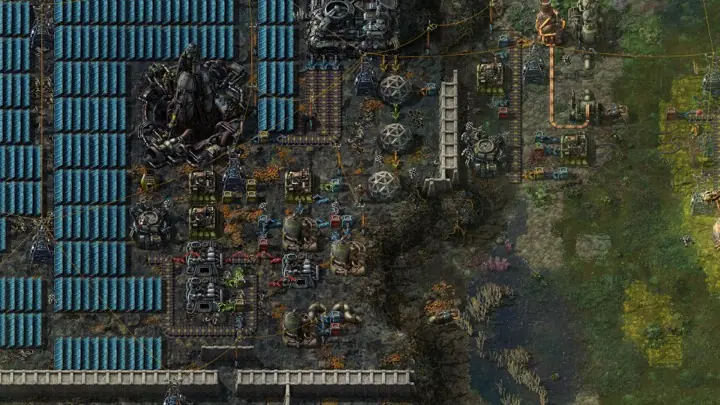
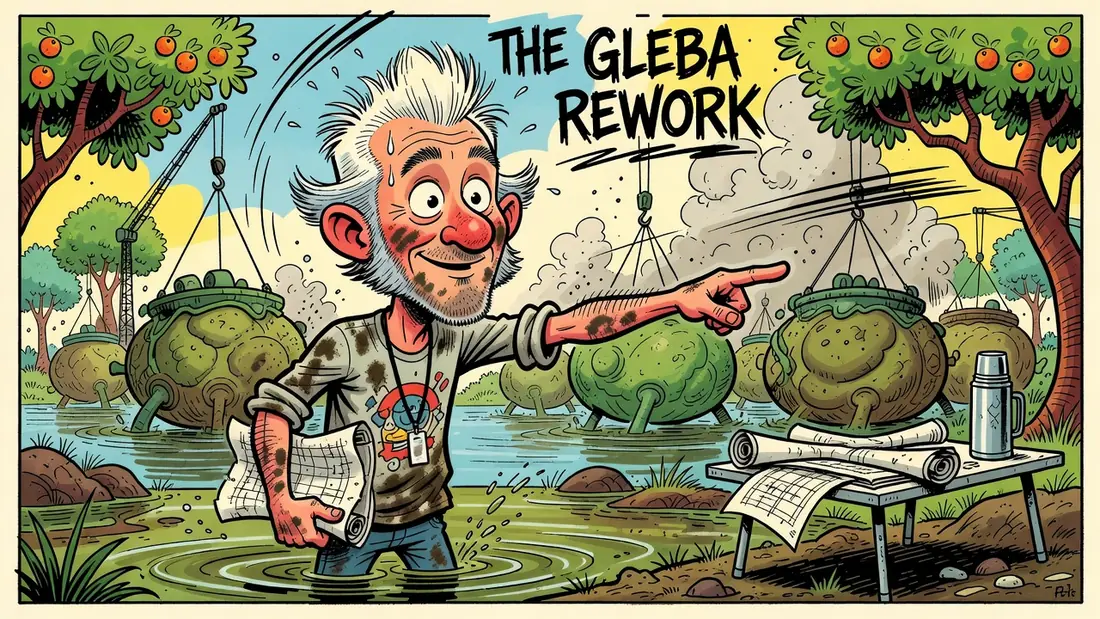
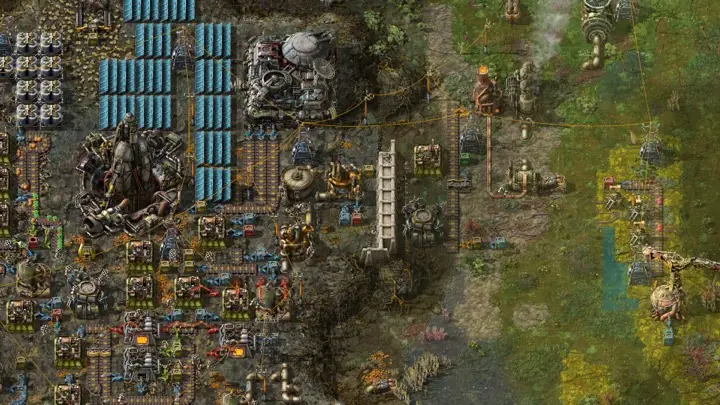
Six months pass. When the folder speaks again it is June 2026, and the saves come in a working cluster with a mission in their names: sdfsdf, wewew, moment-truck — and then, at 1:12 in the morning, "rework-gleba", followed two hours later by "remodel complete." A two-hour overnight renovation, timestamped like a receipt.
The scry shows what those two hours (and the sessions around them) did: the swamp outpost grew from 141 machines — a token camp — to 726: eight biochambers, two agricultural towers, a heating tower, a rocket silo, and eighteen laser turrets, because some doctrines survive every planet. Nauvis, notably, did not gain a single machine in the same window. For one week in June, the builder belonged entirely to the swamp.
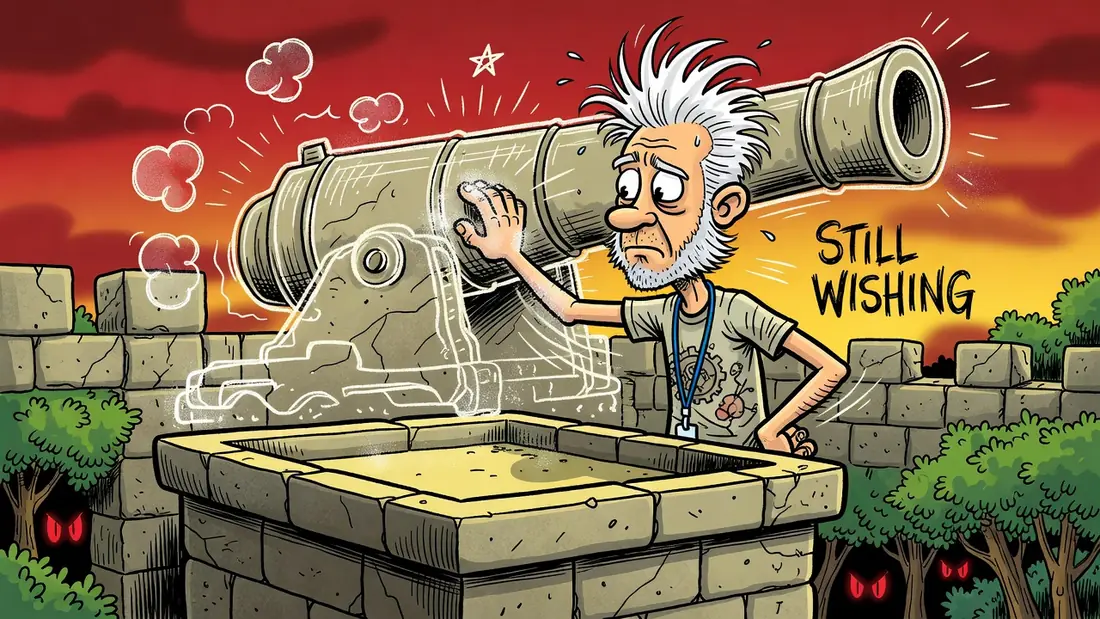
The June cluster ends with the most honest filename in the folder: "slow -- want artillery." Saved twice, a day apart, research parked at 186 technologies, the pace visibly sagging — and a want, written directly into the filing system, addressed to no one.
Here is what the scry has to say about that wish, and it says it gently: as of the newest save in the folder, fifteen months of world-time later, artillery remains unresearched. The pedestal is still empty. Some chapters of this chronicle are about what got built. This one is about the outline in chalk — still on the wall, still waiting, still entirely buildable any week now.
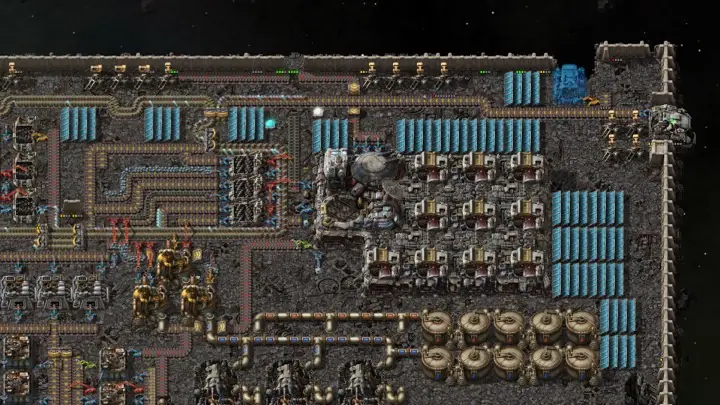
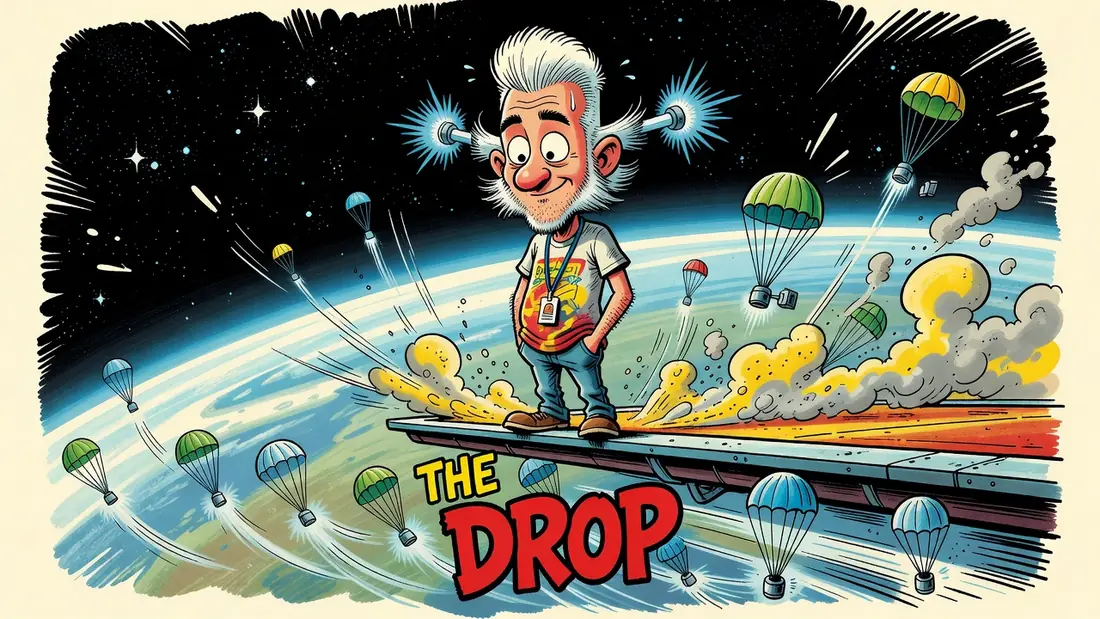
The modern era opens in orbit. On September 4th the builder saves twice from the deck of Moon01 — "about to drop - nauvus," the name of a man narrating his own descent — and the sprint begins. After nine months of drift, research jumps 186 → 193 in eight hours. The boo saves land one after another through the night like footprints at a run.
And in this era the platforms show their long, patient work: the scry finds 17,325 space science packs minted lifetime by platform-3 alone, and the Pallas sisters pouring better than a quarter-million iron ore each down the gravity well every two days. The stations built in the lost chapters, named for moons and mostly forgotten, had quietly become the empire's steadiest citizens.
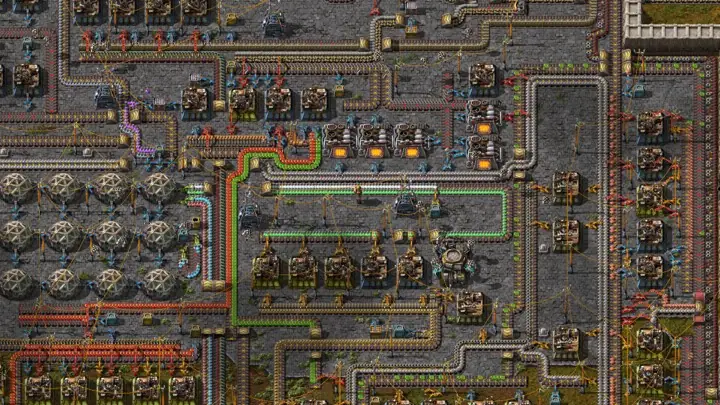
The chronicle's final chapter is the loudest. In the last forty-eight recorded hours the builder fought the biggest war of the world's life: 101 atomic bombs — nearly every bomb since that New Year's toast — ~12,500 bugs killed, four hundred thirty-eight laser turrets raised and 142 of them lost holding the wall. The nest count outside actually fell for the first time in the entire record, from 5,369 to 5,236… and then, within a day, climbed back to 5,384. The world, as ever, builds back.
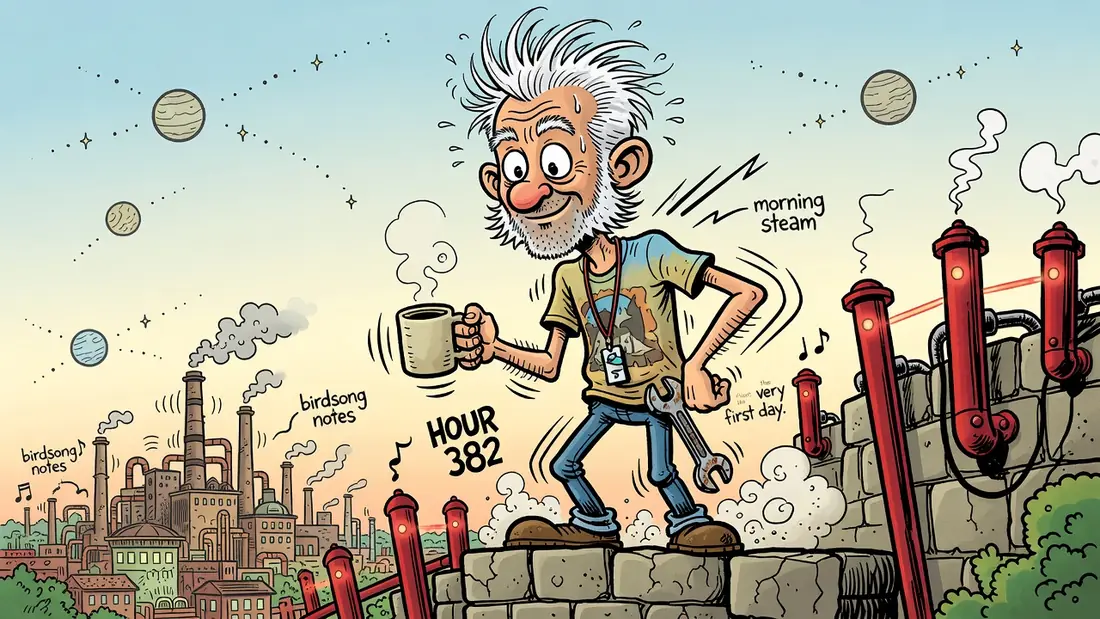
So the ledger stands at hour 382: 25,299 machines on Nauvis. 6.1 million plates, lifetime. 423 rockets. 195 technologies. ~97,000 kills. Five old platforms still working, four planets still held, one wish still chalked on a wall — and a man who started with a wrench beside a burning ship, still standing on the parapet at dawn, still building.